Industry Trends blog posts
Industry Trends blog posts(71)
AI App Delivery Top 10: Inability to handle latency
AI makes latency a trust problem, not just performance: slow “assistant” responses feel like hesitation or failure, and token-heavy prompts/outputs expand work even on healthy systems.
By Lori Mac Vittie
AI App Delivery Top 10: Unoptimized traffic steering
AI breaks traditional traffic steering assumptions: backends aren’t interchangeable, costs vary, and agents fan out unpredictably—so routing must account for model, GPU health, and data locality.
By Lori Mac Vittie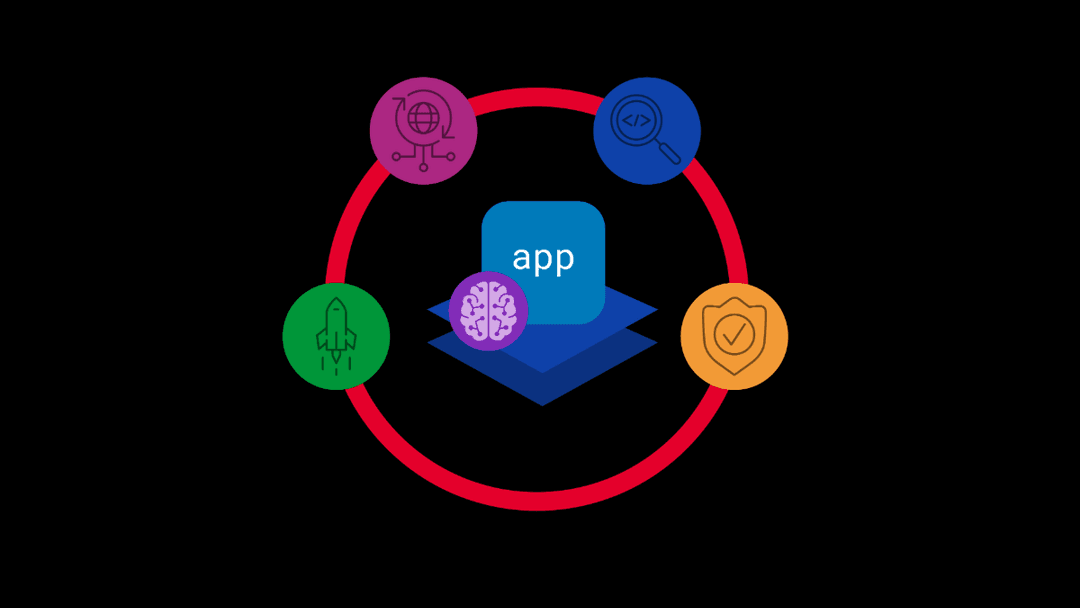
Securing the new control points in the AI journey
AI architecture is fundamentally different than traditional IT environments and requires a different security strategy to protect critical AI workloads.
By Kunal Anand
Why the recent U.S. Executive Order 14412 demands PQC readiness
Learn why a new U.S. executive order designed to secure the nation from cryptographic attacks requires immediate action—and how you can start to prepare.
By Rachael Shah
Data sovereignty: New pressures force organizations to rethink risk
The question is no longer just about where data and applications reside. It’s about who controls them, who can access them, and whether organizations can maintain operational flexibility.
By Bart Salaets
AI App Delivery Top 10: Insufficient Traffic Controls
Traditional rate limits and throttles miss the real blast radius. AI workloads fan out across models, vector stores, and services, driving latency spikes, cascading failures, and retries.
By Lori Mac Vittie
AI App Delivery Top 10: Incomplete observability
AI won’t scale by itself. Without a unified control plane that collapses tooling and ownership boundaries, inference becomes the most brittle and coordination-heavy tier.
By Lori Mac Vittie
What customers are telling us about AI, hybrid multicloud, and application security
F5’s new Senior VP of Product Marketing explains the AI pressures enterprise leaders are facing and what they need to bolster their organizations.
By Nirav Shah
AI App Delivery Top 10: Lack of fault tolerance and resiliency
AI makes classic resiliency gaps far more costly: single GPU or dependency failures cascade through synchronous inference chains, compounding latency and degrading outputs.
By Lori Mac Vittie
Securing our code with frontier AI: What F5 built and learned
F5 is using frontier AI models to change how we find and fix vulnerabilities in our own code.
By Kunal Anand
AI App Delivery Top 10: Weak DNS practices
For inference and agentic systems, DNS resilience is critical to availability and performance—bad resolution means misrouting, latency spikes, and service blackouts across regions.
By Lori Mac Vittie
Behavior and boundaries: The agentic security shift
Agents create emergent, unbounded sequences where risk accumulates over time. Security must shift from single-request validation to continuous behavioral governance across multi-step, evolving flows.
By Lori Mac Vittie
Operational sovereignty: Building resilience in an unpredictable world
For many organizations, the issue is no longer just controlling data. It’s maintaining the ability to operate, adapt, and recover as laws and conditions evolve.
By Bart Salaets
AI security with evidence: What we are bringing to Gartner SRM
Leading up to his session at Gartner SRM, F5’s SVP of Product Marketing discusses how F5 helps organizations secure AI in three practical steps.
By Nirav Shah
Why digital sovereignty is ratcheting up the priority list
Many organizations are rethinking where applications run, who controls critical services, and how dependent they have become on external technology providers.
By Bart Salaets
AI is driving the emergence of new traffic types
AI adoption is creating new first-class traffic types: inference requests plus machine-driven automation traffic and high-volume telemetry traffic that feed control loops.
By Lori Mac Vittie
Enterprise AI needs a better data layer
Learn why reliable data flow, control, and protection matter as much as models and compute. F5 and Dell discuss their technology alliance built for enterprise intelligence projects.
By Hunter Smit, Mark Menger, Adam Robyak
The role of WAFs and API discovery in securing agentic AI applications
To secure agentic AI systems as fast as their capabilities and integrations change at runtime, API discovery and WAFs are necessary to apply practical controls.
By Yaniv Sazman
The post-Mythos era: Why AI-powered defense is no longer optional
Learn why your organization must move now to automate WAF enforcement
By Darshant Bhagat, Debrup Ghosh
Your infrastructure is like a city. Here's why that matters.
Enterprise IT environments are like complex, sprawling cities. See why a single, interconnected management platform is needed to manage them.
By François Locoh-Donou
IT/OT convergence: What’s happening and why security has to lead
As IT and OT systems converge, the attack surface grows. Learn how organizations can integrate securely—and how F5 ADSP helps protect operations at scale.
By Frank Yue
The patch window has closed. Here is how F5 is built for what comes next.
As AI models have changed software security, the industry needs to adapt.
By Kunal Anand
Sessions are sticky, context is clingy: How inference cheats to maintain conversations
“Stateless” inference isn’t truly stateless—conversation state is hauled along in tokens each request. That replay drives bandwidth, compute, and latency as context grows.
By Lori Mac VittieAI latency: Why security can’t be a trade-off
AI latency isn’t just about speed. It’s about designing systems that balance performance, security, and reliability.
By Jessica BrennanYou can’t firewall a conversation: How AI red-teaming became mission-critical
With AI deployments moving at machine speed, traditional methods of testing software are no longer fit for purpose.
By Jessica Brennan, Allan Healy
The benefits of AI for connected vehicle telemetry data
See how AI intersects with telemetry to deliver and secure connected.
By Frank Yue
Agent skills: An emerging open standard
Skills declare intent but don't enforce control. Real security must live at the tool boundary, where agent thoughts become actions and policy can be enforced.
By Lori Mac Vittie
The new hybrid multicloud challenge is operating without an app delivery and security platform
Enterprises aren’t leaving on-prem—they’re modernizing it. As portfolios stay mixed, app delivery and security must shift from environment-specific features to a unified platform.
By Lori Mac Vittie
Securing enterprise AI in financial services
Learn why financial institutions adopting AI must also implement guardrails that can be customized and refined over time.
By Jessica Brennan
Five tiers of antifragile cyber resilience turn practice into outcomes
Learn how five antifragile resilience tiers transform disruption into adaptive behaviors that constrain failures and strengthen hybrid multicloud architecture.
By Griff Shelley, Colin Clauset, Mark Menger