5G는 네트워크의 구축, 운영 및 보안 방식을 근본적으로 재정의했습니다
최신 5G 네트워크는 초저지연, 대규모 확장성, 그리고 무선 액세스 네트워크(RAN), 코어 및 엣지 전반을 아우르는 클라우드 네이티브 서비스 기반 아키텍처를 지원하도록 설계되었습니다.
이 아키텍처는 전례 없는 민첩성과 확장성을 제공하는 동시에 새로운 운영 과제도 야기합니다. 5G 코어는 더 이상 중앙 집중식 네트워크 요소의 집합이 아닙니다. 컨테이너화된 서비스가 동적으로 연결된 메시 구조이며, 여러 공급업체의 환경에 걸쳐 배포되는 경우가 많고 공급업체마다 구현 방식, 보안 모델, 가시성 도구가 서로 다릅니다.
그 결과, 기존 모니터링 방식으로는 제어 평면과 사용자 평면 내부에서 일어나는 상황을 일관되게 파악하기 어렵습니다. 암호화는 핵심 시그널링 데이터를 가리고, 공급업체별 계측 도구는 정보 사일로를 만들며, 기존 패킷 기반 도구는 비용과 복잡성, 성능 오버헤드를 초래합니다. 이로 인해 네트워크가 비즈니스 성과에 더욱 중요해지는 시점에 운영자는 상당한 사각지대에 놓이게 됩니다.
5G 코어는 암호화된 HTTP/2 기반 SBI(서비스 기반 인터페이스)를 통해 통신하는 마이크로서비스의 분산형 메시입니다. 공급업체마다 자체 스택과 보안 모델을 구현하기 때문에 제어 플레인과 사용자 플레인 내부에서 어떤 일이 일어나고 있는지 파악하기 어렵습니다.
5G 관측성의 과제
기존 모니터링 도구는 정적 네트워크와 암호화되지 않은 패킷 흐름을 전제로 설계되었습니다. 하지만 오늘날의 컨테이너 기반 5G 아키텍처에서는 다음과 같은 이유로 이러한 전제가 더 이상 유효하지 않습니다:
- 워크로드는 동적으로 변화합니다. 네트워크 기능(NF)은 지속적으로 확장 및 축소되므로 제어 플레인과 사용자 플레인 전반에서 가시성과 상관관계 분석에 공백이 발생합니다.
- 트래픽은 종단 간 암호화됩니다. 전송 계층 보안(TLS) 1.3 및 HTTP/2 기반 SBI 메시징은 기존 모니터링 및 보안 시스템이 의존하는 메타데이터를 숨깁니다.
- 멀티벤더 통합은 마찰을 일으킵니다. 각 벤더는 자체 가상 탭(VTAP) 또는 패킷 캡처 메커니즘을 제공하지만, 이는 해당 벤더의 NF, 형식 및 운영 범위로 제한됩니다.
- 파편화된 가시성은 보안을 약화시킵니다. 가입자, 세션 및 네트워크 기능의 동작을 통합적으로 파악할 수 없으면 제로 트러스트 적용과 이상 징후 탐지를 일관되게 대규모로 구현하기가 매우 어려워집니다
이러한 과제는 다음과 같은 5G 네트워크의 고유한 특성으로 인해 더욱 심화됩니다:
- SBI 및 비SBI(PFCP, NAS, NGAP, F1-AP)를 모두 아우르는 고유 프로토콜과 레거시 프로토콜 및 프로토콜 스택
- 이전 세대의 물리적 인프라
- 인프라, 애플리케이션(네트워크 기능), 보안, 운영 체제 및 오케스트레이션을 비롯한 여러 도메인에 걸친 모니터링 필요
- 광범위하고 확장 가능하며 연결성이 뛰어난 네트워크를 필요로 하는 지리적 서비스 범위 및 사용자 경험 요구 사항
이러한 환경을 보호하려면 운영자는 추가적인 오버헤드나 운영 복잡성을 초래하지 않으면서 모든 메시지, 세션 및 가입자 이벤트를 실시간으로 파악할 수 있어야 합니다. 또한 정책은 변화하는 규제 및 규정 준수 요건을 충족하는 동시에 위험에 즉각 대응할 수 있어야 합니다.
고급 보안 활용 사례에서는 가입자 식별 정보가 매우 중요합니다. 또한 네트워크 로그와 도메인 전반에서 가입자를 정확하고 일관되게 식별해야 하는 규정 준수, 감사 및 합법적 감청 요건을 충족하는 데에도 필수적입니다.
클라우드 네이티브 환경의 가시성 과제
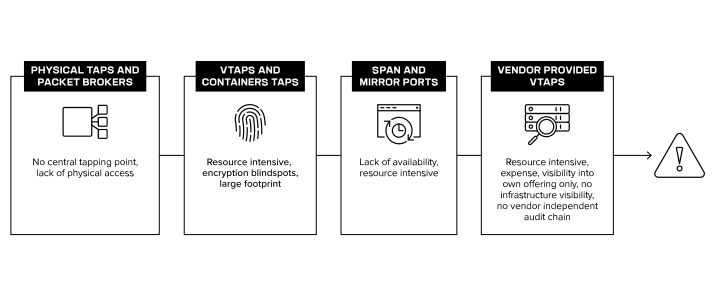
분산 환경에서 클라우드 네이티브 가시성을 확보하는 것은 본질적으로 어렵습니다. 워크로드는 동적으로 생성되고 수명이 짧으며 오케스트레이션 계층 뒤에 숨겨지는 경우가 많아, 기존의 패킷 중심 모니터링 모델로는 효과적인 모니터링이 점점 더 어려워지고 있습니다.
가시성을 확보하는 기존 방식은 정적 인프라와 중앙 집중식 트래픽 흐름을 전제로 설계되었습니다. 클라우드 네이티브 5G 환경에서 이러한 방식은 가시성 사각지대와 운영 부담을 초래하고 확장성을 제한합니다.
F5 BIG-IP eBPF Observability로
간소화되고 최적화된 5G 구현
최신 5G 환경에는 여러 공급업체를 아우르고, 5G 전용 SBI 및 비SBI 프로토콜을 모두 이해하며, 보안·운영·규정 준수 워크플로를 지원하는 데 필요한 상황별 인텔리전스를 제공할 수 있는 일관된 고성능 관측성 계층이 필요합니다.
F5 BIG-IP eBPF Observability(EOB)는 5G 코어, 엣지 및 다중 액세스 엣지 컴퓨팅 환경 전반에 배포된 경량 컨테이너형 에이전트에서 풍부한 메타데이터를 캡처하여 이러한 기능을 제공합니다. eBPF 기술을 기반으로 하는 각 에이전트는 커널 수준에서 직접 트래픽을 관찰하며, 사이드카, 패킷 브로커 또는 공급업체별 TAP에 의존하지 않고 제어 평면(SBI, NGAP, PFCP)과 사용자 평면 트래픽을 모두 포괄합니다.
기존 방식과 달리 EOB는 노드당 단일 에이전트를 사용하여 해당 노드의 모든 포드와 컨테이너에 대한 완전한 가시성을 제공함으로써 운영 오버헤드를 최소화하는 동시에 암호화와 동적 확장으로 인해 발생하는 사각지대를 제거합니다.
이러한 에이전트에서 수집된 텔레메트리는 보안 메시지 버스를 통해 다운스트림 분석, 서비스 보증 및 보안 플랫폼으로 실시간 스트리밍됩니다. 이를 통해 네트워크 동작을 관찰하고, 컨텍스트를 분석하며, 정책을 적용하고, 상황 변화에 따라 동적으로 대응하는 지속적인 운영 루프가 구현됩니다.
작동 방식
BIG-IP EOB는 코어, 엣지/MEC 및 분산 인프라를 아우르는 클라우드 네이티브 5G 환경 전반에 통합된 노드 수준의 관측성 계층을 제공합니다.
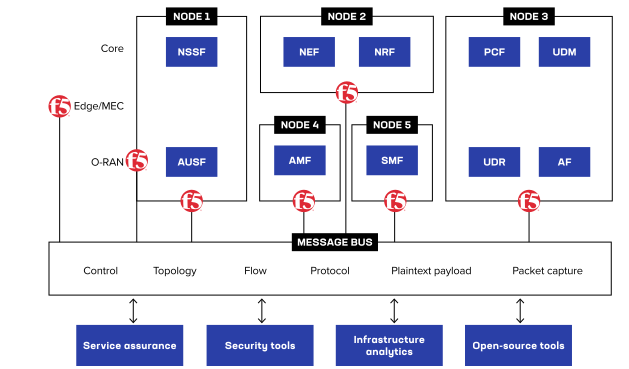
BIG-IP EOB는 Kubernetes가 실행되는 모든 환경에 배포할 수 있는 경량 컨테이너형 에이전트로 구성됩니다. 각 에이전트는 eBPF 기술을 사용하여 커널 수준에서 직접 네트워크 활동을 관찰하므로 사이드카, 패킷 브로커 또는 공급업체별 탭에 의존하지 않고도 제어 평면 시그널링과 사용자 평면 트래픽을 모두 심층적으로 파악할 수 있습니다.
EOB 에이전트는 네트워크 트래픽과 컨테이너 내부 통신에서 다음을 비롯한 다양한 유형의 텔레메트리 데이터를 캡처하고 생성합니다:
- 원시 패킷(특정 문제 해결용)
- 동적 토폴로지 및 서비스 관계
- 암호화된 트래픽에서 추출한 메타데이터(TLS 1.3 포함)
- 프로토콜별 컨텍스트(예: F1-AP, SBI, DNS, HTTP)
- 고급 클라우드 네이티브 플로 레코드(CNFlow)
분석 플랫폼과 서드파티 도구는 특정 사용 사례에 필요한 데이터만 프로그래밍 방식으로 요청할 수 있으므로, 오버헤드를 줄이는 동시에 필요할 때는 완전한 충실도의 가시성을 유지할 수 있습니다.
모든 BIG-IP EOB 텔레메트리는 즉시 활용할 수 있도록 보안 메시지 버스를 통해 실시간으로 지속 스트리밍되며, 동기식 및 비동기식 워크플로를 모두 지원합니다. 이 아키텍처는 사각지대나 성능 저하 없이 서비스 보증, 보안, 인프라 분석 및 오픈 소스 도구 전반에서 지속적인 운영 루프를 구현합니다.
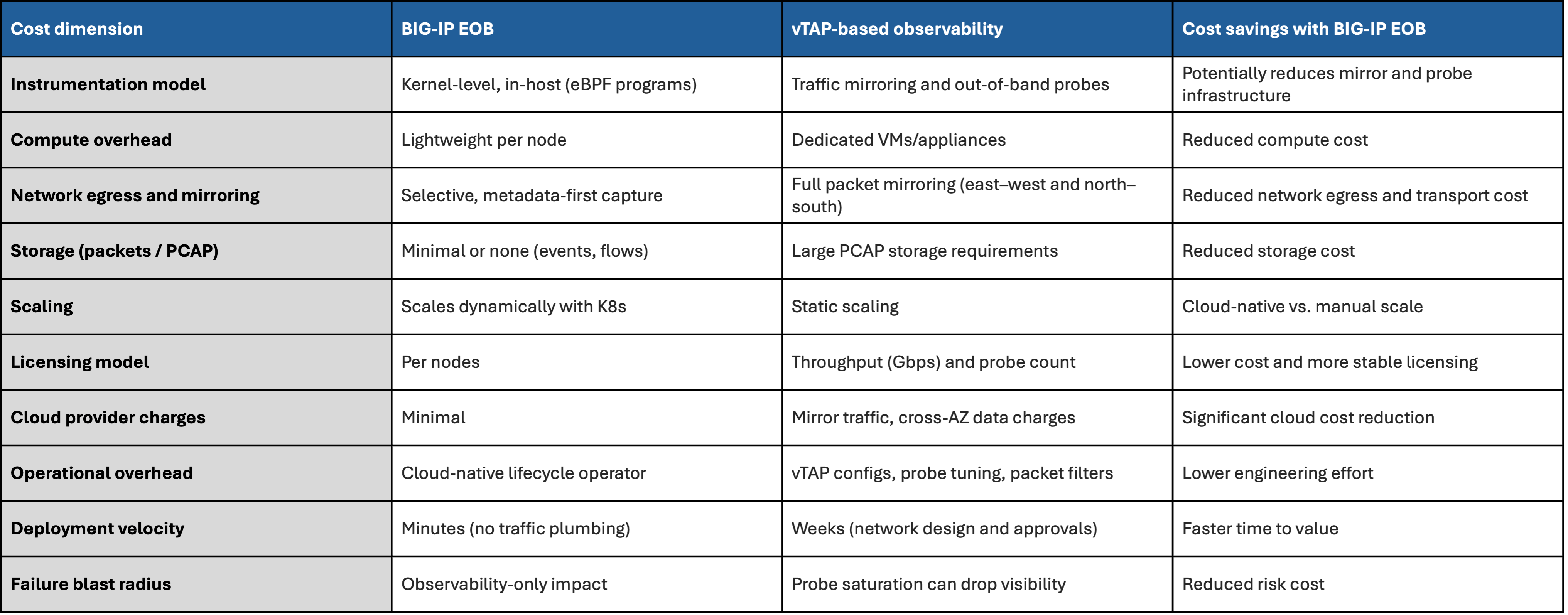
BIG-IP EOB와 vTAP 기반 옵저버빌리티 비교
BIG-IP EOB를 통합하면 기존 방식에 비해 확실한 이점을 얻을 수 있습니다:
실질적인 영향
대형 티어 1 서비스 제공업체는 이전까지 여러 공급업체별 vTAP에 의존하던 멀티벤더 5G 코어 전반에 BIG-IP EOB를 배포했습니다. 이 통신 사업자는 일관되지 않은 텔레메트리, 네트워크 기능 전반의 가시성 공백, 타사 프로브로 인한 과도한 리소스 소비 문제를 겪고 있었습니다.
운영자는 노드당 하나의 BIG-IP EOB 에이전트를 배포하여 5G 코어 전반에 걸쳐 통합된 벤더 중립적 가시성을 확보했습니다. 텔레메트리는 CNF로 실행되는 F5 BIG-IP Advanced Firewall Manager (AFM)를 비롯한 클라우드 네이티브 분석 및 보안 플랫폼으로 실시간 스트리밍되어, 더 빠르게 인사이트를 확보하고 정책을 더욱 일관되게 적용할 수 있게 되었습니다.
측정 가능한 개선 사항은 다음과 같습니다:
- 특정 공급업체에 종속되지 않고 네트워크 기능 전반에 대한 통합 가시성 확보
- 기존 vTAP 기반 방식에 비해 리소스 사용량 감소
- 문제 해결 및 정책 기반 적용을 위한 응답 시간 단축
BIG-IP EOB는 개방형 표준과 컨테이너화된 아키텍처를 기반으로 구축되어 F5 솔루션 및 타사 분석 플랫폼과 원활하게 통합됩니다. 텔레메트리 데이터를 보안 정보 및 이벤트 관리(SIEM) 시스템, 인공 지능 및 머신 러닝 파이프라인 또는 NETSCOUT이나 EXFO와 같은 서비스 보증 플랫폼으로 스트리밍할 수 있으므로, 데이터를 중복 수집하지 않고도 운영 전반에 대한 폭넓은 인사이트를 확보할 수 있습니다.
결론
심층적인 커널 수준의 가시성과 경량 클라우드 네이티브 배포 모델을 결합한 BIG-IP EOB를 통해 운영자는 최신 5G 및 클라우드 네이티브 워크로드 전반의 사각지대를 해소할 수 있습니다.
BIG-IP EOB는 5G 코어, 엣지 및 분산 인프라 전반에 걸쳐 실시간으로 벤더에 구애받지 않는 관측성을 제공하며, 추가적인 오버헤드 없이 암호화된 동적 환경에서 중요한 콘텐츠를 추출합니다. EOB는 고정밀 텔레메트리를 기존 분석, 서비스 보증 및 보안 플랫폼으로 스트리밍하여 운영자가 사후 대응식 문제 해결에서 벗어나 더 빠르게 인사이트를 확보하고, 정책 집행을 강화하며, 대규모 환경에서 더욱 탄력적으로 네트워크를 운영할 수 있도록 지원합니다.
추가 제품 정보는 f5.com에서 확인할 수 있습니다. 영업 전문가와 상담하려면 F5 영업팀에 문의하세요.