Top AI use cases in financial services
Banks and financial institutions are rapidly adopting AI and changing how they operate—they’re making decisions faster, personalizing service at scale, and cutting costs across the institution. These shifts aren’t inconsequential; they have the potential to be real game changers for the sector.
Why the sense of urgency? The data reveals:
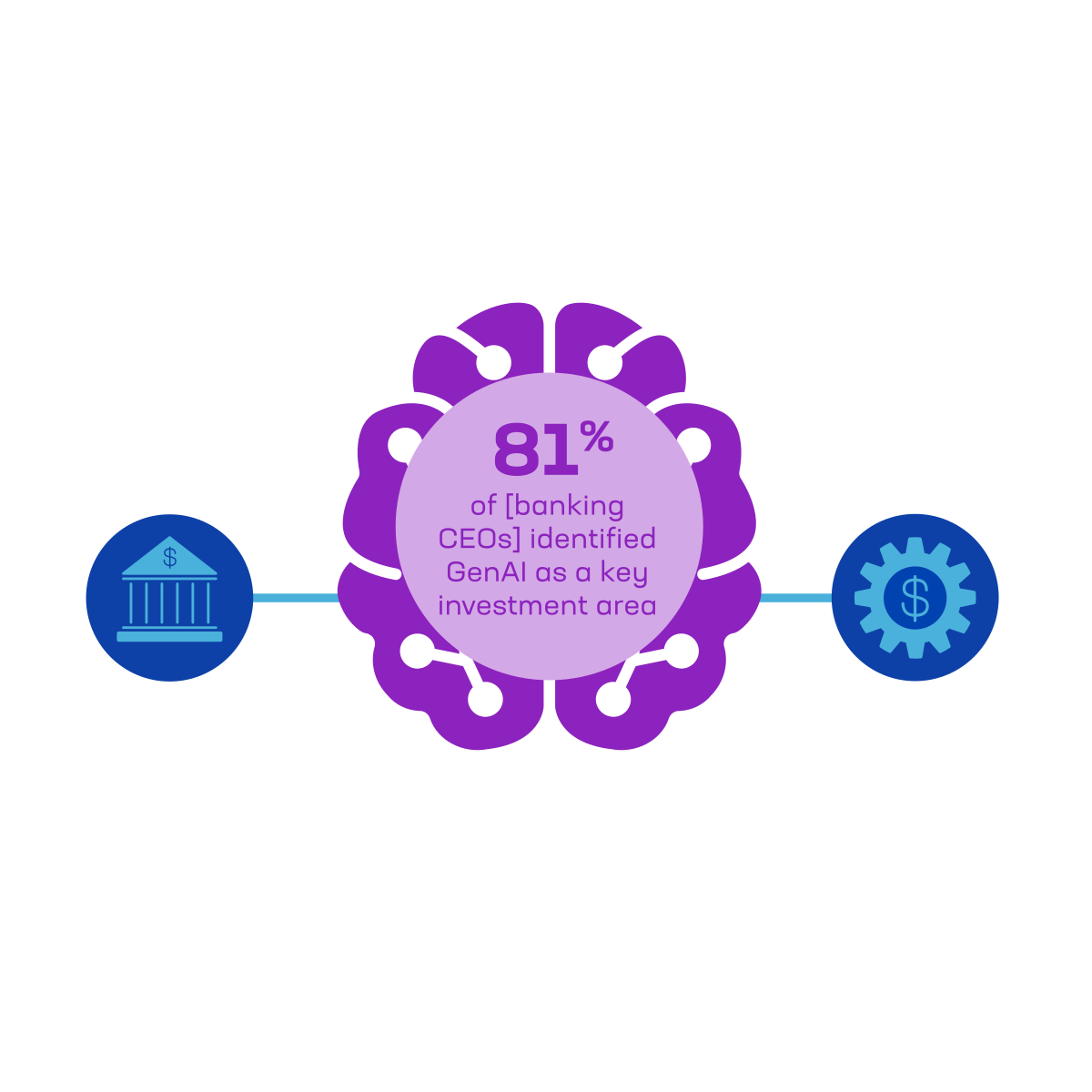
- 81% of global banking CEOs view generative AI (GenAI) as a crucial investment for business transformation (KPMG).
- Over half of banking executives plan to use GenAI to boost productivity; 38% expect those gains to reduce costs (Deloitte).
- More than 80% of financial services organizations have adopted AI (State of Application Strategy Report: Financial Services Edition).
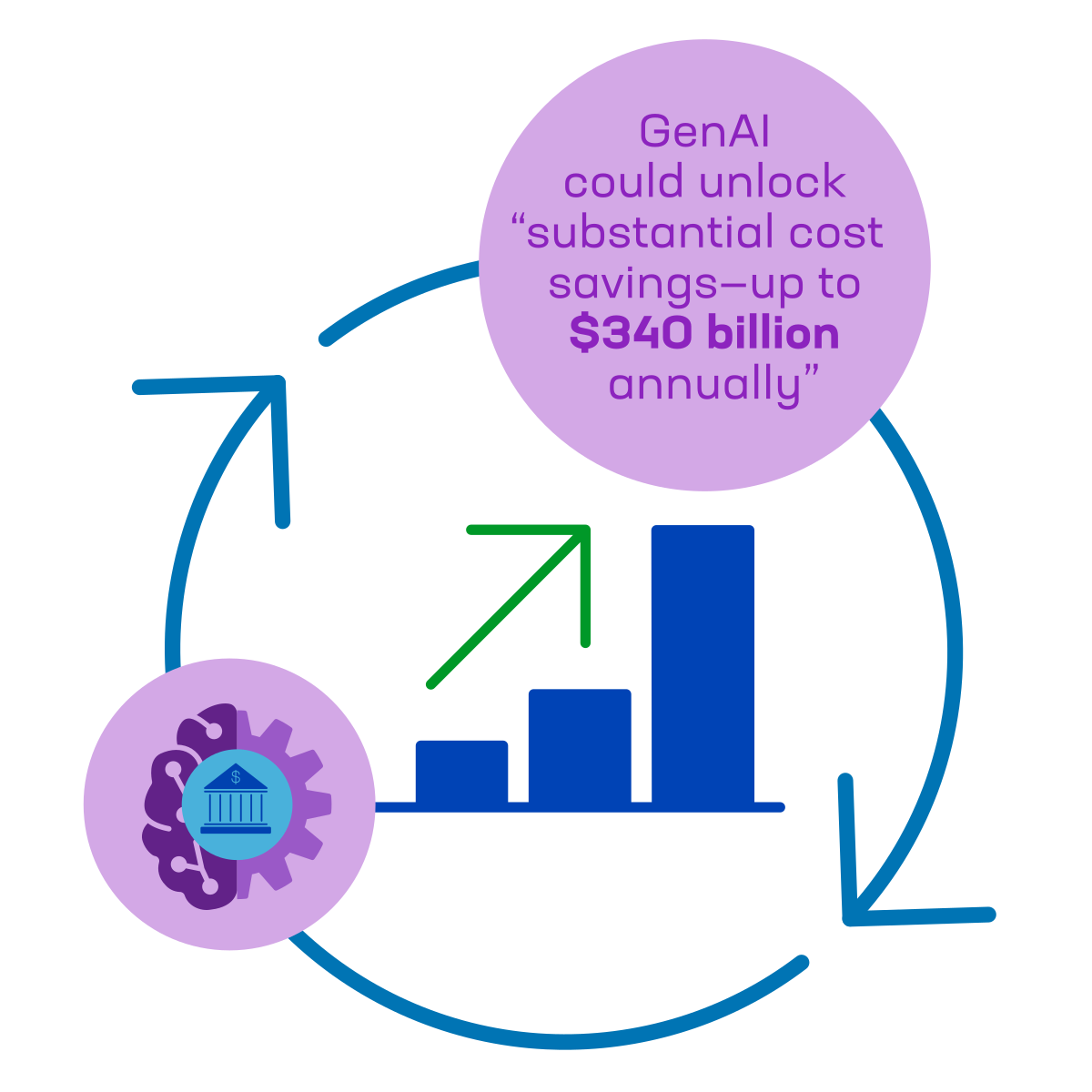
- GenAI could enable up to $340 billion in annual industry savings (MIT Technology Review).
Below are four priority AI use cases that are currently driving the biggest impacts in financial services: enhanced account holder experience, fraud detection, risk and compliance management, and operational efficiency. Click each tab to get a quick read on what each use case can do, a concrete example, and the business value.
Account holder experience
Enhanced account holder experience
Deliver highly personalized, contextual interactions that make every account holder feel known and served faster.
Key ways it delivers:
- Pull real-time account holder history, wallet share, and prior interactions into agent workflows.
- Power chatbots and virtual assistants that deliver contextually relevant responses and personalized offers to account holders.
- Use retrieval augmented generation (RAG) to combine institution data with models for tailored, privacy-aware recommendations. (Learn how to secure RAG with the right solutions.)
Example: A customer summary is delivered—within seconds—to a call center agent, including account holder credit usage, support history, and next-best action.
Value: Faster resolution, higher NPS, and increased cross-sell/upsell conversion
Learn more about enhancing account holder experiences with AI and its associated technology challenges in this new eBook.
Fraud detection
Detect anomalous activity faster and more accurately.
Key ways it delivers:
- Monitor transactions and device signals in real time to surface anomalous activity affecting account holders.
- Apply behavioral analytics to reduce false positives while catching sophisticated attacks.
- Use RAG to feed proprietary fraud profiles and account holder transaction histories into detection pipelines.
Example: Global pattern detectors flag suspicious campaigns while private models confirm institution-specific risk from account holder transaction context.
Value: Faster, more accurate detection and lower fraud losses
Learn more about improving fraud detection with AI and its associated technology challenges in this new eBook.
Risk and compliance management
Anticipate and manage risk and compliance proactively.
Key ways it delivers:
- Predict credit and market risks using institution-tuned models that consider account holder behavior.
- Summarize regulatory changes and map them to internal policies and controls.
- Capture detailed logs of AI activity to provide auditable trails for compliance and governance.
Example: Automated risk reports flag loan books or account holder segments that need review and generate compliance-ready summaries for auditors.
Value: Better-informed lending and risk decisions, faster reporting, and reduced regulatory exposure
Learn more about improving risk and compliance management with AI and its associated technology challenges in this new eBook.
Operational efficiency
Automate core operations to reduce cost and improve consistency.
Key ways it delivers:
- Automate document management, loan underwriting steps, reconciliation, and ticket routing with traceable AI workflows.
- Use RAG to ensure automated decisions include up-to-date internal data for accuracy and auditability.
- Leverage private AI factories to securely scale sensitive operational automations while using third‑party models for less sophisticated tasks. (Learn how to minimize costs and maximize GPU utilization with AI factory tuning.)
Example: Automated loan approvals combine credit scores, income history, and underwriting rules into a single, auditable workflow.
Value: Faster cycle times, lower cost to serve, consistent execution, and measurable productivity gains
Learn more about improving operational efficiency with AI and its associated technology challenges in this new eBook.