
As I stated in my December 2018 blog, nowadays application modernization is mostly led by the pressure from the business side. When we received and started analyzing the results in The State of Application Services for 2019, we took a close look at some of the items on organizations’ agendas. (For a quick summary of its findings, see this blog.) The report is global but there’s also a version focused on Asia Pacific. It shows that while our part of the world has much in common with the rest of the planet, there are some important differences. Let me point out the three key takeaways.
Some Asia Pacific regions outpace the global average in the shift to the digital economy
The global report found that 67% of respondents have digital transformation projects in place. In Asia Pacific, we found three regions are moving faster than that.
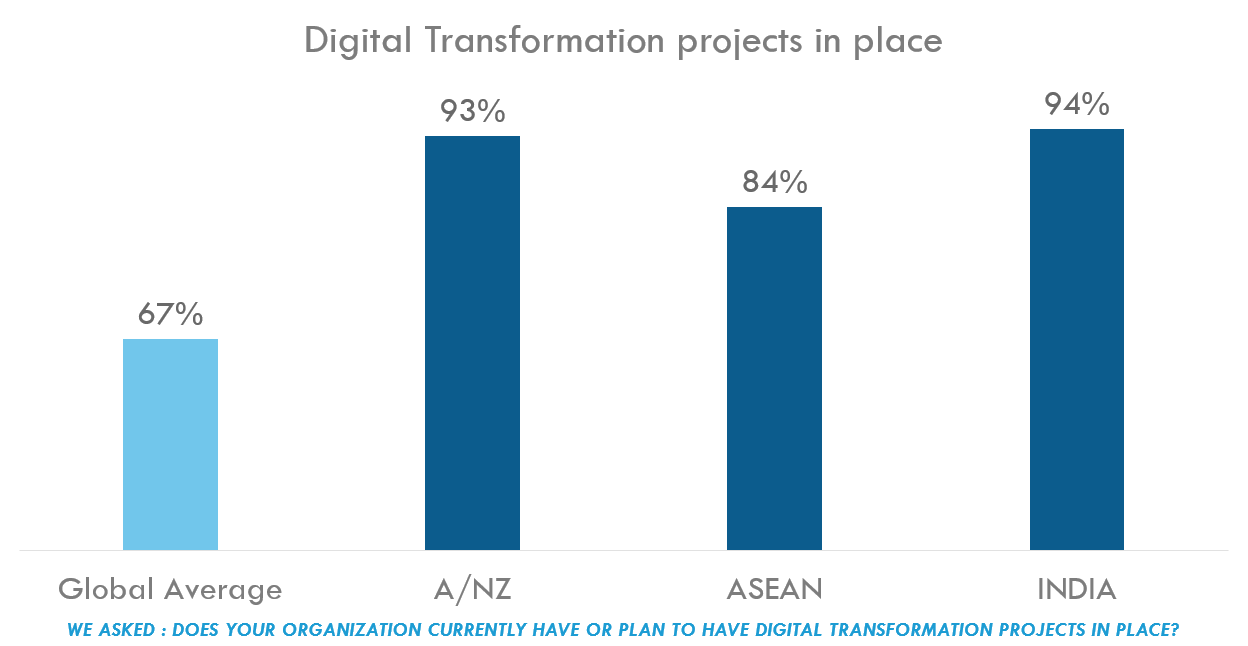
This isn’t a great surprise. Australia and New Zealand are widely known for their high rate of cloud deployments, driven by IT transformation and DevOps trends. India’s Digital India initiative has been running for more than three years, and these days we’re hearing plenty about the growth of the country's digital economy. ASEAN is also growing rapidly and exploring opportunities to leap frog developments in both infrastructure and services.
Leading digital economy: Two sides of the coin
The digital economy is without doubt an opportunity for IT teams to contribute to their organizations in fresh ways. But it also comes with challenges. Here’s one example from the report:
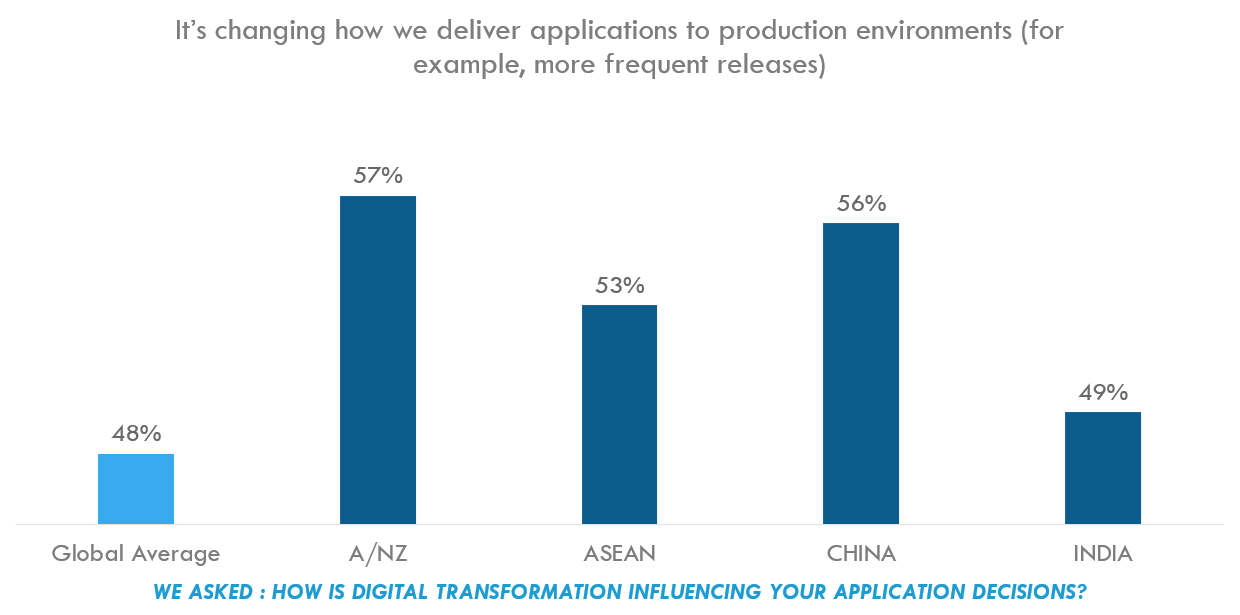
You’ll no doubt agree that digital business requires lean and agile IT and applications, which means the applications supporting businesses need to be ready for frequent updates, upgrades, and changes. It’s clear that these four regions—each of which has a higher rate than the global average—are advanced in terms of modernizing their application development cycles. At the same time, however, it means they get more pressure from business teams.
An appetite for emerging technologies is common across the globe
Not all Asia Pacific countries are ahead of the global average in their digital transformations. However, being less aggressive does not mean they are disinterested in new technologies. Check this out:
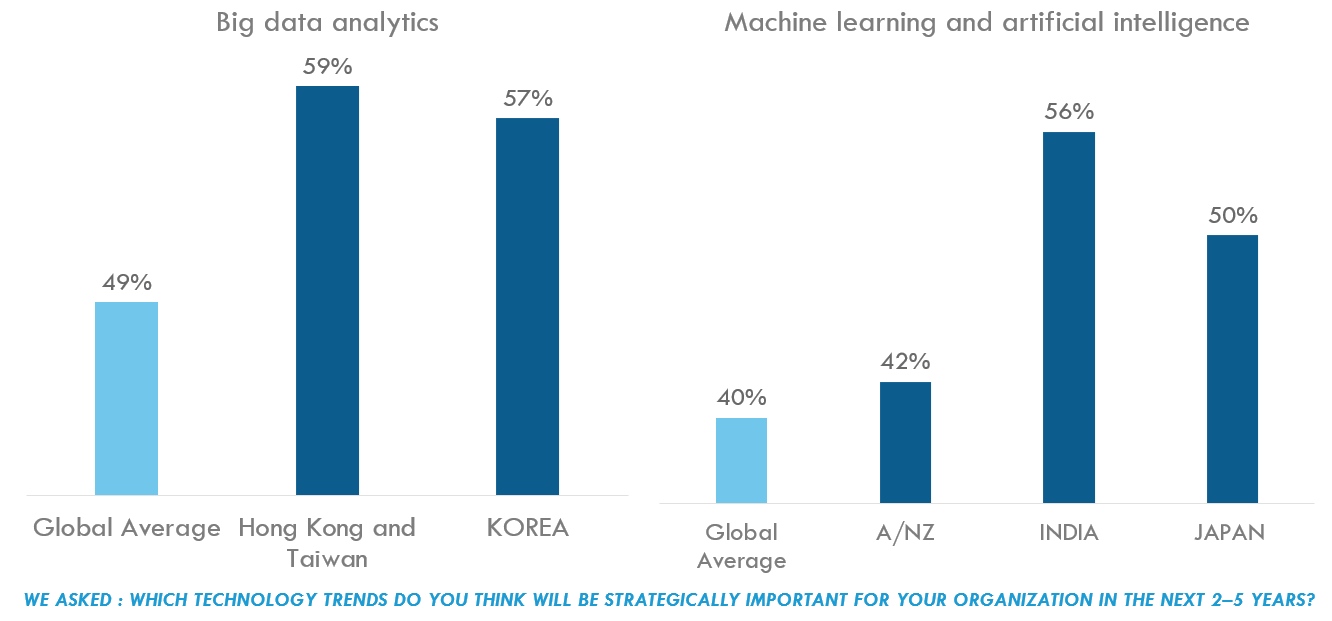
Each country has its own focus when it comes to emerging technologies. In the global result, big data analytics was regarded as the most strategically important, but some countries in North Asia showed even higher interest in it, and also in technologies such as machine learning and artificial intelligence. We believe this underlines the reality that, while those countries struggle with deploying digital transformation projects, they are likely already investigating them and even PoC testing them to prepare for the evolution of their IT platforms.
Automated self-service infrastructure is unavoidable
A final note about very important topics: automation and orchestration, in conjunction with self-service IT. You cannot go ahead with modernizing the app architecture, frequent releases, and an app-centric infrastructure for the digital economy without first putting in place automated self-service infrastructure.
Expectations from the business side have definitely changed. Businesses won’t wait for IT. Without question, they now decide the speed of IT. And with that in mind, this stat is telling for operations teams:
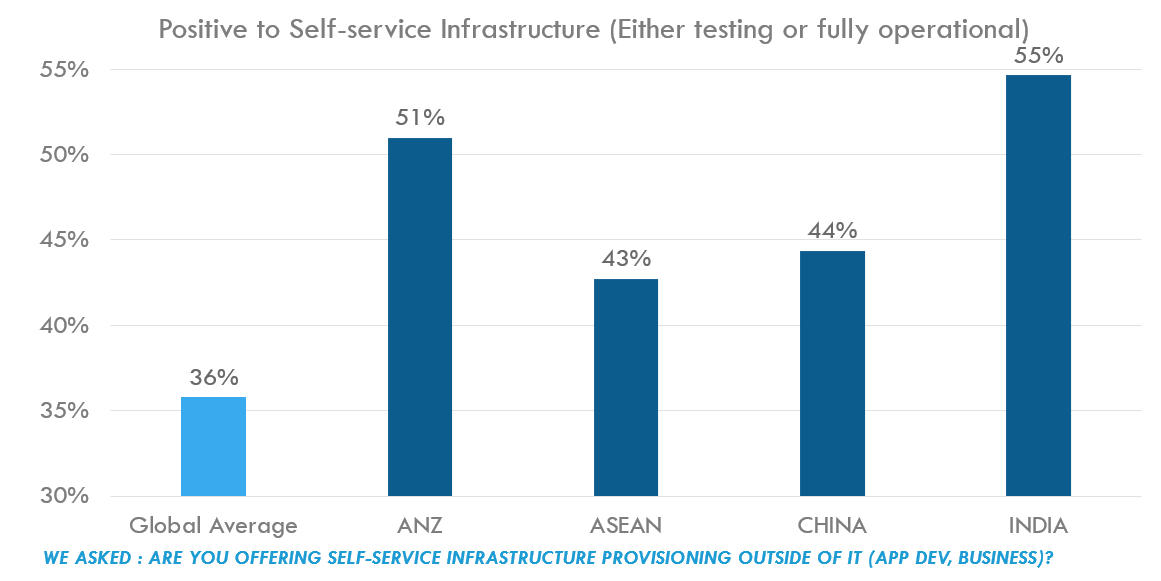
It’s good to see many Asia Pacific regions being more positive than average to self-service deployment—and although it is not stated in the chart above, the average in Asia Pacific is also slightly higher than that globally (37% versus 35.8%). However, it is crucial for IT teams to make their digital platforms ready to run at the speed of digital business. Especially now that we are expected to do more with less, automating processes and enabling self-service IT for businesses is a key success factor in IT, both for network teams and application developers as well.
Conclusion
This year, we found correlations within Asia Pacific regions between several elements: digital economy, emerging technologies, applications, and automated self-service infrastructure. The trends differ, but at the end the goal should be the same: We are all exploring business evolution, no matter which geography and which industry we are in. Which phase is your organization in today? Hopefully the full Asia Pacific report will trigger a constructive discussion in your organization about your own digital transformation journey.
About the Author
Related Blog Posts

A new path to technical excellence for F5 partners
Introducing F5 Partner Foundations, a structured learning curriculum to build F5 partner engineer expertise with a clear pathway to specialization.

Secure-by-design storage for agentic AI: Why runtime visibility plus traffic control matters
Learn how F5 is collaborating with NVIDIA to help protect agentic AI with secure-by-design AI infrastructure, runtime visibility, and traffic control.

Why sub-optimal application delivery architecture costs more than you think
Discover the hidden performance, security, and operational costs of sub‑optimal application delivery—and how modern architectures address them.

Architecting for AI: Secure, scalable, multicloud
Operationalize AI-era multicloud with F5 and Equinix. Explore scalable solutions for secure data flows, uniform policies, and governance across dynamic cloud environments.

AppViewX + F5: Automating and orchestrating app delivery
As an F5 ADSP Select partner, AppViewX works with F5 to deliver a centralized orchestration solution to manage app services across distributed environments.

F5 NGINX Gateway Fabric is a certified solution for Red Hat OpenShift
F5 collaborates with Red Hat to deliver a solution that combines the high-performance app delivery of F5 NGINX with Red Hat OpenShift’s enterprise Kubernetes capabilities.