
State CIO priorities 2026: Securing and scaling digital government services with F5
Secure, reliable, high-performing apps and APIs remain top priority for state and local government CIOs
NASCIO’s State CIO Priorities for 2026 places artificial intelligence as the biggest concern of this year’s CIO strategies, policy issues, and management processes list. Cybersecurity and modernization remain among the top priorities. All items reflect the need for secure, reliable, high-performing applications and APIs.
In 2026, state and local government IT organizations face a pivotal moment: their success will depend on how well they protect, scale, and modernize the applications that power digital government across hybrid and multi-cloud environments.
The top five forces defining state CIO agendas in 2026
Artificial intelligence, GenAI, and Agentic AI
The challenge
AI is no longer theoretical. States are deploying it across citizen services, analytics, and internal operations. But AI dramatically expands the attack surface, adding new APIs, sensitive data flows, unpredictable traffic, and higher expectations for trust and transparency. Scaling AI requires highperformance, secure, and resilient application infrastructure.
How F5 can help
F5 helps state and local governments secure and scale AI workloads by:
- Protecting AI-models, APIs and data pipelines from abuse, bots, and injection attacks
- Ensuring consistent performance and availability for AI-driven applications
- Consistently applying security controls and governance guardrails across environments
F5 enables responsible AI adoption, without compromising trust, privacy, or reliability.
Cybersecurity and risk management
The challenge
Even as AI becomes top priority, cybersecurity remains critical. Government agencies face sophisticated threats targeting applications, APIs, and identity workflows. Perimeter security alone is no longer enough, and fragmented tools with inconsistent policies increase risk and slow response times.
How F5 can help
F5 enables ‘defense in depth security’ by:
- Protecting web and API endpoints from evolving threats
- Protecting critical services from ransomware and automated attacks
- Enforcing consistent security policies across on‑prem, cloud, and SaaS environments
F5’s proactive security platform approach helps states strengthen resilience while supporting modernization and innovation.
Budget, cost control, and fiscal management
The challenge
In 2026, fiscal pressure shapes every technology decision. IT teams must modernize while controlling costs, yet tool sprawl, redundant services, and operational complexity continue to drive inefficiency.
How F5 can help
F5 ADSP supports fiscal discipline by:
- Consolidating application delivery and security into a single platform
- Simplifying hybrid multicloud operations with centralized management and policy
- Extending the value of existing infrastructure investments
By simplifying architectures and reducing duplication, F5 supports cost control withing governments without sacrificing performance or security.
Learn why a consolidated application delivery and security platform matters ›
Modernization
The challenge
Modernization is not just about replacing legacy systems; it’s a continuous improvement. Legacy and cloud‑native apps will coexist to avoid disruption to mission‑critical services.
How F5 can help
F5 supports low-risk, phased modernization by:
- Supporting legacy, containerized, and cloud‑native apps side by side
- Providing consistent traffic management across environments
- Enabling automation and programmability for modern operations
Hybrid IT environments are now the norm, not the exception.
Learn how to modernize IT without disrupting critical services ›
Digital government / digital services
The challenge
As citizen expectations increase, state and local government must ensure that digital services are just as reliable as those provided by the private sector. At the same time, agencies must balance usability with compliance.
How F5 can help
F5 helps states deliver secure, high-performing citizen digital services by:
- Ensuring availability and performance during traffic spikes and peak demand
- Protecting citizen-facing payment portals and service APIs from attacks and downtime
- Scaling seamlessly during usage spikes
F5 helps build citizen trust while increasing adoption of government digital services.
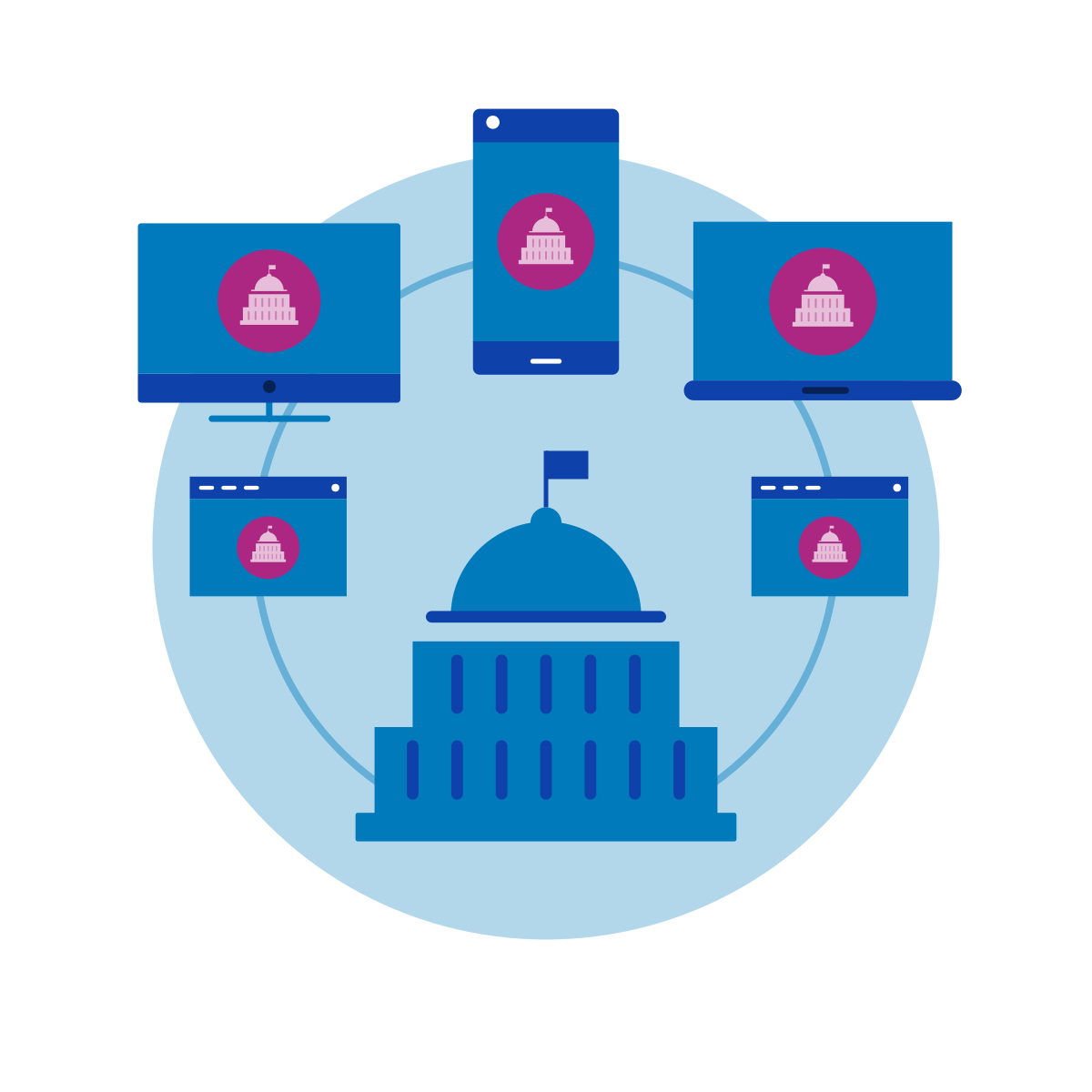
“In 2026, applications are the mission: AI, cybersecurity, modernization, and digital services all depend on secure, high performing applications and APIs.”
Building for long-term success
Accessibility
The challenge
Accessibility is a core requirement for 2026. Service outages, latency, and instability disproportionately impact residents who rely on assistive technologies
How F5 can help
F5 supports accessibility outcomes by:
- Improving uptime and reliability of public‑facing applications
- Reducing performance bottlenecks that affect accessibility tools
- Supporting resilient service delivery at scale
By ensuring reliable digital services, F5 helps ensure accessibility commitments are met in practice, not just in policy.
Identity and access management (IAM)
The challenge
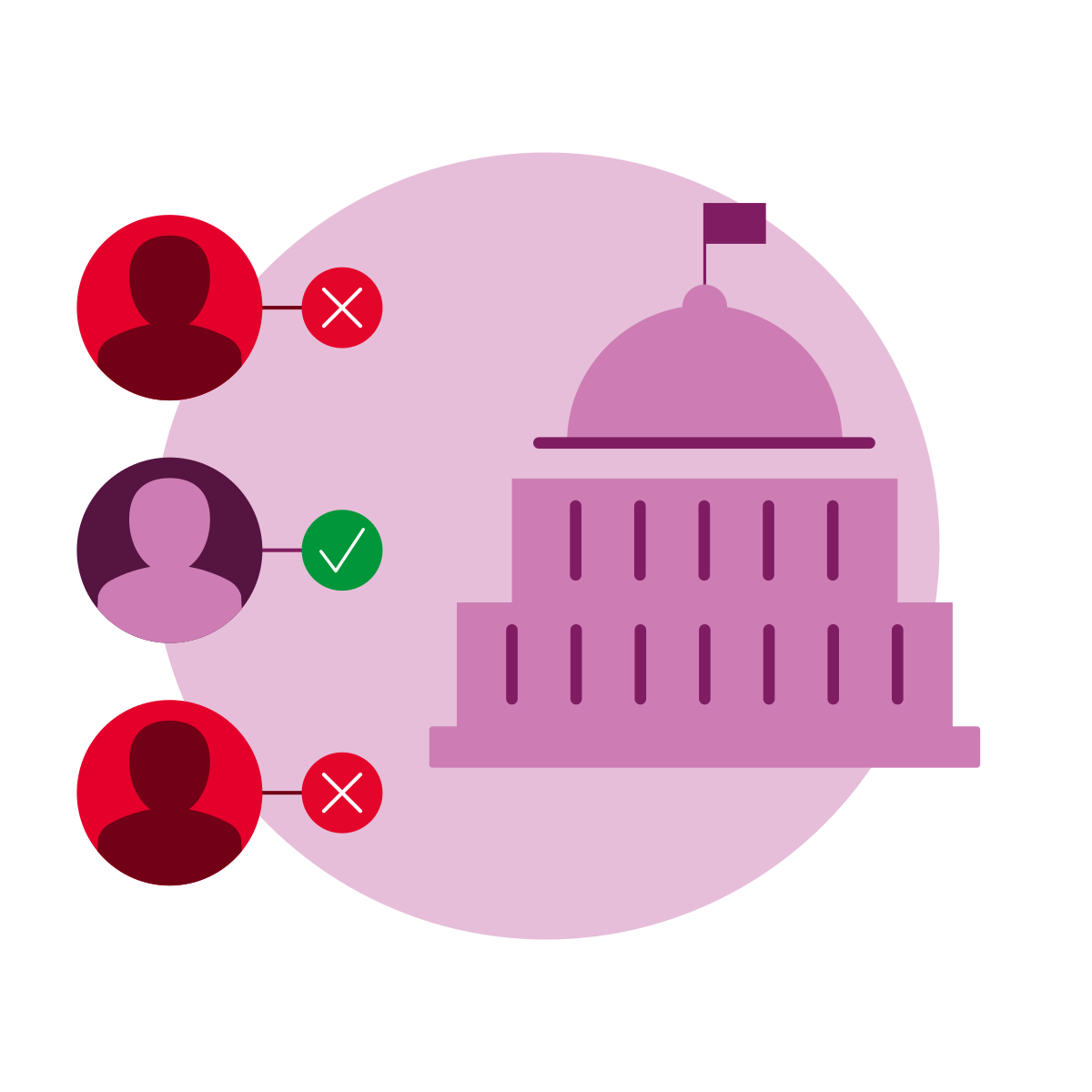
Digital services are expanding rapidly, and identity is the new perimeter. States must secure access for citizens, employees, and partners across distributed environments.
How F5 can help
F5 strengthens IAM strategies by:
- Securing authentication and authorization workflows
- Protecting identity APIs from abuse and automation attacks
- Ensuring performance and availability of access services
This enables secure, seamless access at scale.
Data management and analytics
The challenge
AI and analytics depend on secure, reliable access to data. Underperforming and insecure data pipelines can derail AI initiatives and undermine trust.
How F5 can help
F5 helps protect data by:
- Securing API-driven data access
- Preventing data exfiltration and abuse
- Supporting low latency data movement to and from storage.
F5 helps states state and local governments to unlock the value of data without increasing risk.
Consolidation and optimization
The challenge
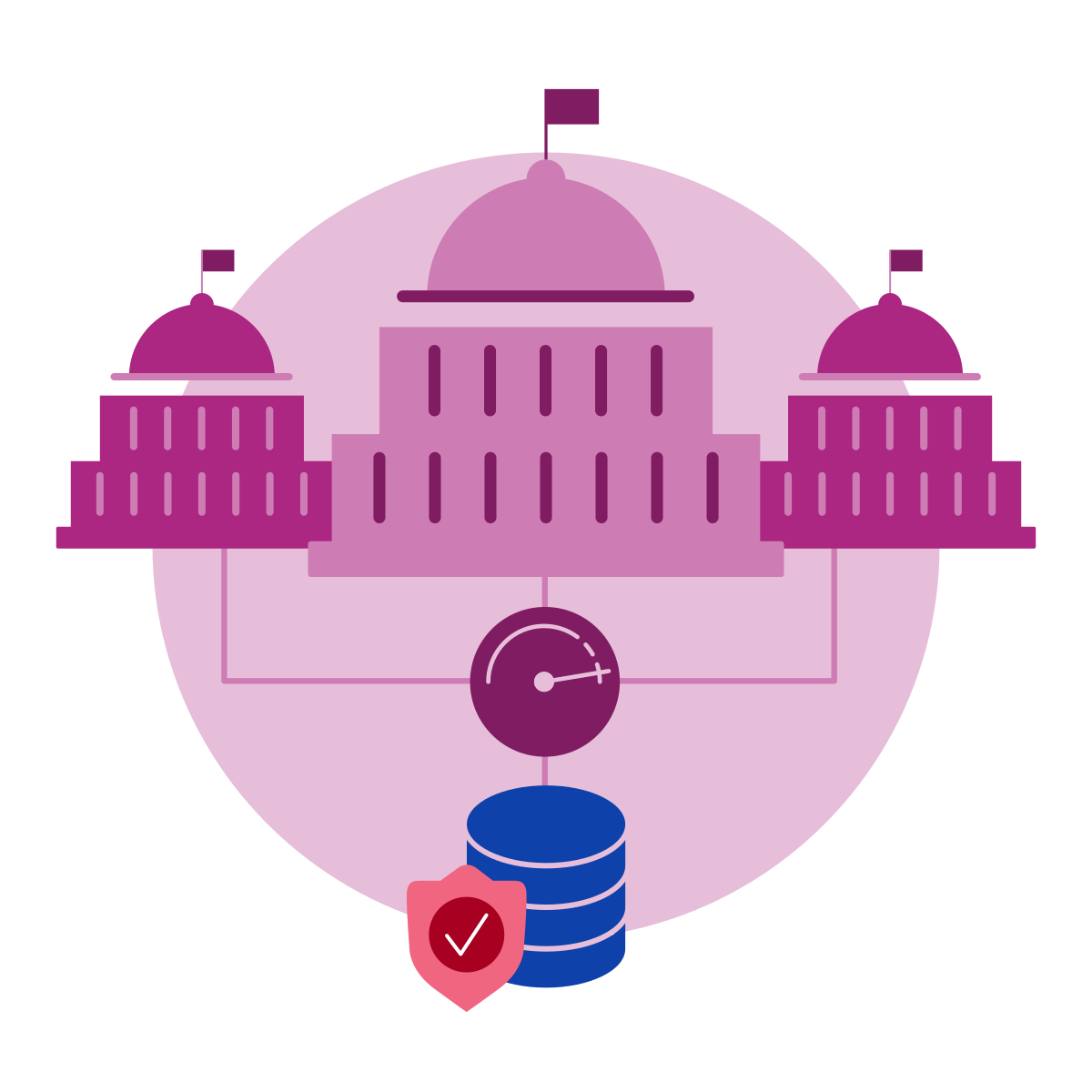
Consolidation is once more a priority as states pursue efficiency, consistency, and enterprise-wide visibility. Fragmented tools and architectures increase cost and risk.
How F5 can help
F5 enables consolidation by:
- Centralizing application delivery and security controls
- Supporting shared services and enterprise models
- Reducing operational and architectural complexity
F5 helps state and local governments to operate more like an enterprise by consolidating networking and security services, and centralizing management.
Cloud services
The challenge
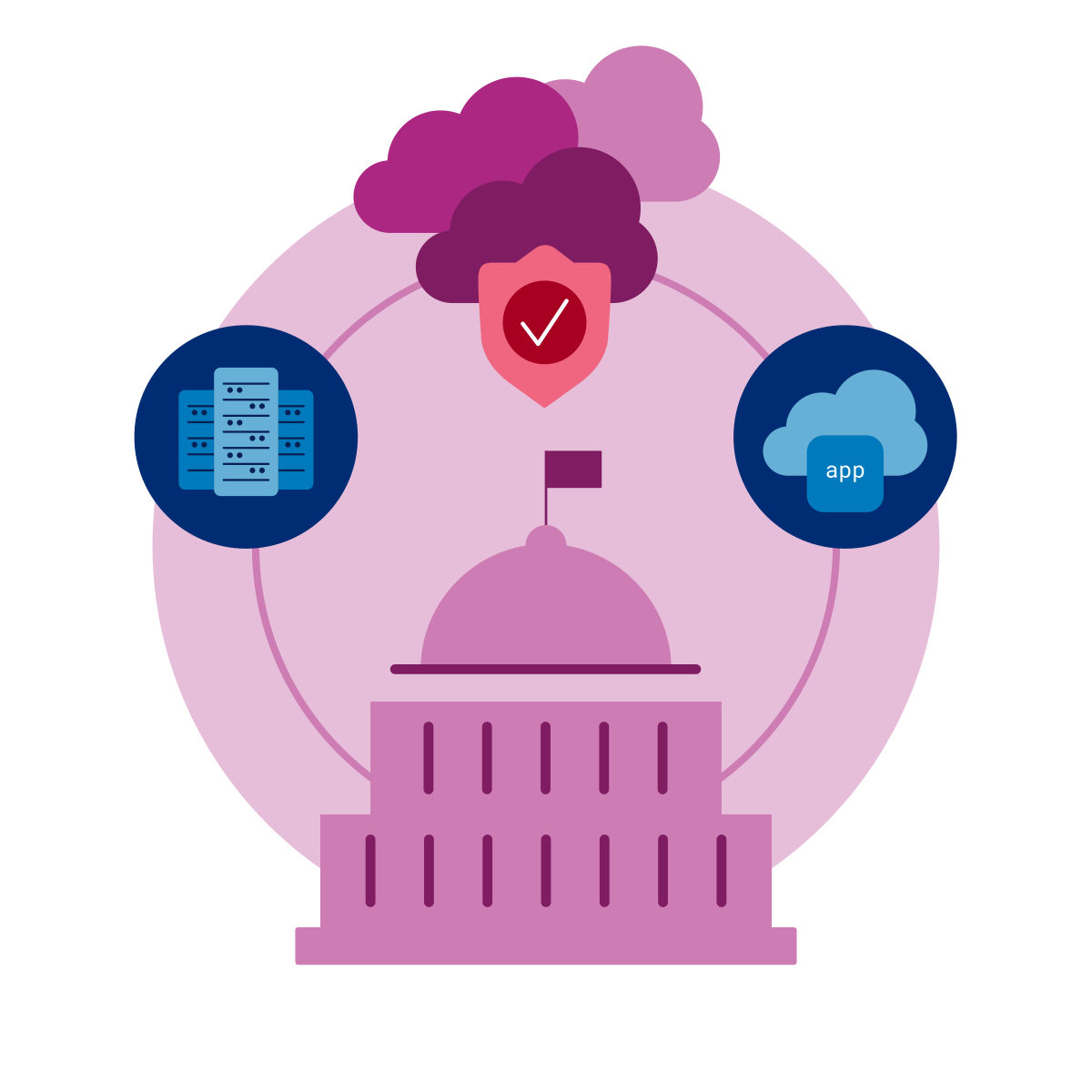
As cloud adoption grows, IT-leaders are focused on governance, security, cost control, and interoperability across multiple cloud providers.
How F5 can help
F5 enables secure hybrid and multi-cloud operations by:
- Delivering consistent application security across clouds and edge
- Helping agencies to avoid cloud lock-in
- Supporting cloud‑native and traditional workloads equally
F5 allows state and local governments to adopt strategic cloud approach.
“From accessibility and identity to data, consolidation, and cloud, states need consistent application delivery and security to reduce risk, control cost, and scale with confidence.”
What this means for state and local governments
The 2026 NASCIO priorities confirm what state agencies already know: applications are the mission. AI, cybersecurity, and digital services, all converge at the application layer. By prioritizing application-centric security, performance, and reliability, teams can focus on innovation while managing risk, cost, and complexity.
With the F5 Application Delivery and Security Platform, states and local governments gain a consolidated platform for delivery and security, unified policy and visibility across hybrid and multicloud environments, and the confidence to innovate without increasing risk.