La coherencia es la clave para afrontar con confianza los retos de la multinube.
Al principio (allá por 2007), surgió la nube. Y se trataba principalmente de SaaS, ya que las organizaciones adoptaban con entusiasmo soluciones listas para usar que sustituían las aplicaciones empresariales que antes alquilaban por otras alojadas en la nube.
Aunque sin duda hubo muchos pioneros en la adopción de otros modelos de nube, como IaaS, la migración de aplicaciones empresariales no comenzó realmente hasta que hubo algunas aplicaciones lo bastante estandarizadas como para sustituirlas por una solución SaaS.
Esa tendencia apenas está empezando a cobrar verdadero impulso. Tradicionalmente, la cartera de aplicaciones de una empresa rondaba las 300. Eso era antes de que la transformación digital se convirtiera en algo «imprescindible» para competir en la economía de las aplicaciones. Ahora, sin duda, hay más, con una lista de tareas pendientes tan larga como los atascos de hora punta en la autopista 101 de Silicon Valley. Esto significa que una mayor adopción de la nube no solo es probable, sino prácticamente segura.
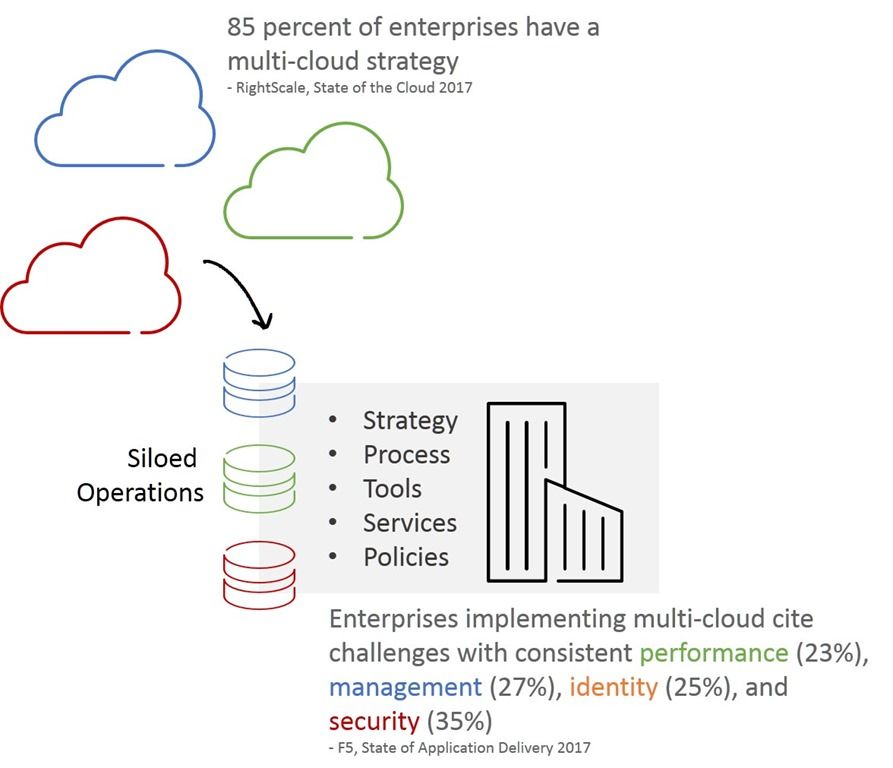
Pero eso también implica más retos, porque, a medida que más aplicaciones se trasladan a más nubes —privadas y públicas, tanto locales como externas—, resulta más difícil mantener la coherencia. No hay dos nubes exactamente iguales. Cada una tiene sus propias API y consolas de gestión, además de sus ecosistemas, cada vez más importantes. Requieren competencias, conocimientos y herramientas específicos. El resultado es un conjunto creciente de silos operativos dentro de las organizaciones, acorde con su inversión en distintas nubes. Cada silo tiene su propia estrategia, sus propios procesos y sus propias herramientas. Y eso ya supone un reto considerable. La complejidad aumenta aún más debido a los servicios específicos de cada nube y, por tanto, a las políticas que surgen como consecuencia (no intencionada).
Por supuesto, este reto no va a detener a las empresas. Seguirán adelante pase lo que pase, porque las ventajas hacen que las dificultades propias del crecimiento merezcan la pena.
Una buena noticia para las empresas que emprenden el camino hacia la multinube es el anuncio de la disponibilidad de VMware Cloud on AWS.
Coherencia con VMware Cloud on AWS y F5
Como quizá recuerde, VMware Cloud on AWS está diseñado para acelerar ese proceso al permitir poner en marcha clústeres de VMware SDDC listos para producción en la infraestructura global de AWS. La versión de este mes se centra en permitir a los clientes desarrollar nuevas aplicaciones y facilitar las iniciativas de migración de aplicaciones.
Pero permitir que las empresas trasladen sus aplicaciones a la nube de forma fluida y más rápida es solo el primer paso. La mayoría de los retos asociados a la multinube surgen después, cuando la aplicación ya funciona sin problemas en algún lugar de la nube. Es entonces cuando cobran protagonismo la coherencia operativa, la gestión y el cumplimiento de esos engorrosos acuerdos de nivel de servicio (SLA). VMware Cloud on AWS aborda estos retos al permitir que las organizaciones utilicen las competencias y herramientas que ya poseen, lo que aporta la coherencia operativa necesaria entre entornos para reducir el estrés (y los costes) en los entornos multinube.
La compatibilidad con su ecosistema de partners —incluido F5— permite a los clientes abordar los problemas de coherencia en materia de seguridad, identidad y rendimiento con los mismos servicios que utilizan en sus instalaciones en VMware Cloud on AWS. Esto supone trasladar a la nube las inversiones en competencias, creación de políticas y herramientas.
La capacidad de gestionar y proteger de forma coherente las aplicaciones que migran a la nube proporciona a las organizaciones el margen (también presupuestario) necesario para centrarse en las aplicaciones pendientes que la empresa necesita para triunfar en la economía digital. Esto es importante, dado que, según un informe de OutSystems de principios de 2017 en el que participaron más de 3200 profesionales de TI, el 44 % señaló que desarrollaría más de 10 aplicaciones y casi 1 de cada 7 tenía previsto desarrollar más de 100 aplicaciones ese año. Esto también supone más trabajo para quienes implementan y protegen esas aplicaciones y gestionan su rendimiento, muchas de las cuales, sin duda, se trasladarán por diseño a nubes públicas. Con la disponibilidad de VMware Cloud on AWS, VMware y sus socios pretenden que ese proceso sea lo más sencillo y satisfactorio posible.
Puede obtener más información sobre VMware Cloud on AWS aquí, y sobre F5 y VMware aquí.
Sobre el autor

Lori MacVittie es ingeniera distinguida y evangelista jefe en la Oficina del CTO de F5, y cuenta con una amplia experiencia en entrega de aplicaciones, estrategia de automatización e infraestructura. Es conocida por convertir la complejidad en claridad, ya sea definiendo mecanismos de protección para agentes de IA, analizando arquitecturas multinube frágiles o explorando los límites de los sistemas escalables. Aporta más de treinta años de experiencia en el sector en desarrollo de aplicaciones, arquitectura de TI y operaciones de redes y sistemas. Antes de incorporarse a F5, fue una galardonada editora de tecnología. MacVittie posee un máster en Informática y es una autora prolífica cuyas publicaciones abarcan la seguridad, la nube y la arquitectura empresarial. También es una apasionada de los juegos de mesa y los videojuegos, y expresa sin complejos sus firmes opiniones sobre el queso.
Más artículos de Lori Mac VittieArtículos relacionados del blog
Cree servicios públicos seguros, resilientes y preparados para la IA con F5 y AWS
Descubre cómo las organizaciones del sector público pueden modernizar de forma segura sus aplicaciones y soluciones de IA, al tiempo que gestionan los sistemas heredados, el cumplimiento normativo y el riesgo operativo.

Protección de los sistemas de IA: por qué la seguridad debe avanzar al ritmo de la innovación
Desde acelerar avances revolucionarios en medicina y educación hasta transformar la vida cotidiana, la IA está cambiando nuestra forma de vivir y trabajar. Pero también ofrece grandes oportunidades a los ciberdelincuentes.
Avanzar hacia la optimización digital tras la transformación
Descubre estrategias de optimización digital para garantizar políticas de seguridad coherentes, impulsar la madurez de la transformación digital y superar los retos de la transformación.
Proyecto de código abierto destacado: mayor observabilidad con F5 Cloud Logger iApp
En el punto de mira del código abierto: cómo aumentar la observabilidad. Lee el blog de F5 para descubrir cómo exportar fácilmente la telemetría de BIG-IP a plataformas modernas de análisis en la nube.
El estado de la entrega de aplicaciones en 2018: la transformación digital impulsa la automatización y la multinube pese a las preocupaciones de seguridad
Descubre las principales conclusiones del cuarto informe anual de F5 sobre el estado de la entrega de aplicaciones.
Estado de la entrega de aplicaciones en 2017: automatización, API y DevOps
Descubre el informe sobre el estado de la entrega de aplicaciones de 2017. Lee el blog retrospectivo de F5 sobre los inicios del auge de las redes declarativas y los flujos de DevOps.