The F5 Blog
Explore the industry’s premier Application Delivery and Security Platform and how we’re partnering to drive success in an AI-powered world.
Featured Blog Posts
F5 recognized as a Market Shaper in the September 2026 Gartner® Emerging Market Quadrant™ for AI application security
F5 is one of only two vendors recognized by Gartner as a Market Shaper.
By John Maddison
AI found it. AI is stopping it.
How existing F5 WAF signatures and AI-powered risk scoring stopped PHP2Shell.
By Ramy Houssaini, Debrup Ghosh, Muhammad Abid
IDC MarketScape recognized F5 as a Leader in Web Application and API Protection Platforms 2026 Vendor Assessment
IDC MarketScape noted key strengths of F5 including AI-powered WAF.
By Nirav ShahAll Blog posts(1967)
How are customers using the F5 AI Security Platform?
See why customers are turning to the F5 AI Security Platform for strong, out-of-the-box protection plus the customization they need to meet their specific security needs.
By Mark Toler
Securing the agentic enterprise at scale
Learn how enterprises can accelerate development of AI agents while streamlining management and security with Google Cloud Agent Gateway and F5 AI Guardrails.
By Jason Williams, Matthew Emes
AI found it. AI is stopping it.
How existing F5 WAF signatures and AI-powered risk scoring stopped PHP2Shell.
By Ramy Houssaini, Debrup Ghosh, Muhammad Abid
AI data governance: Control data across the AI lifecycle
AI data governance keeps sensitive data under control across the AI lifecycle. Learn the risks, the rules, and best practices for secure AI model governance.
By F5 Newsroom Staff
Delivering and securing AI agents in AI factories: F5 for the NVIDIA OpenShell Reference Architecture for safe AI agents
F5 solutions extend the NVIDIA OpenShell Reference Architecture for safe AI agents.
By Kunal Anand
OPSWAT + F5: AI file security from upload to agent
See how OPSWAT and F5 bring AI file security to the F5 AI Reference Architecture, inspecting files before they reach models, RAG pipelines, and agents.
By Klaus Schwegler
Distributed inference: 50 data centers, one service
Distributed inference with F5: How F5 DNS solutions and F5 BIG-IP Next for Kubernetes turn a network of GPU sites into one service with AI-aware, SLA-driven routing.
By Praful Bhaidasna
Bot detection isn’t enough in the agentic AI era
Agentic AI is creating autonomous agents that can reason, plan, and act. That means more pressure on security teams to determine bot intent and how to respond.
By Vikas Shetty
The inference path is the traffic path: Where AI security has to live
AI traffic now carries intent, data, and actions. Learn why the inference path has become the most important place to enforce AI security.
By Abbas Kudrati
Agentic AI in cybersecurity: Promise and risk
Learn why using agentic AI for cybersecurity is essential for combating AI-powered threats and why agents also create new enterprise risks.
By Louise Scully
HDI Sigorta scales secure digital insurance with F5 ADSP
See how HDI Sigorta keeps 500,000 daily insurance transactions secure with F5 ADSP.
By Kazim Cesur
What winning migrations actually looks like after the community’s ingress controller retirement
See why organizations across many industries are moving to F5 NGINX Ingress Controller following the retirement of community-maintained Ingress NGINX.
By Jordan Gardner, Karthik Krishnaswamy
When patching can't keep pace and protection can't wait
Because security threats move faster than app development and deployment cycles, protection must operate independently. Here’s how modern WAAP steps up.
By Nirav Shah
Inside innovation at F5: Joel Moses on building what’s next
Discover how Joel Moses turned a lifelong curiosity for how things work into a career focused on engineering, meaningful innovation, and building what’s next at F5.
By F5 Newsroom Staff
Why AI storage needs a resilient front door: A view from SNIA SDC 2026
F5 explains why resiliency and security must be designed together for AI storage, how F5 BIG-IP delivers both at the S3 layer, and what we shared at SNIA SDC 2026.
By Florin Meilescu, Paul Pindell, Sandeep Agarwal, Jonathan Chen
PQC migration looks daunting. It isn’t if you narrow the problem.
One of the biggest PQC readiness mistakes is looking across your technology estate and concluding that everything needs to change at once. It doesn't.
By Joel Moses
What infrastructure efficiency means at service provider scale
Independent testing from The Tolly Group shows how F5 BIG-IP Cloud-Native Edition improved resource efficiency across DNS and L4+CGNAT workloads on Red Hat OpenShift.
By Shoaib Yusuf
Cloud-native modernization for the AI and 5G/6G era
See why 5G/6G, Kubernetes maturity, and AI are accelerating cloud-native modernization, and how F5 BIG-IP Cloud-Native Edition improves efficiency.
By Ahmed Guetari
How to select the right AI and application security partner
Discover how AI and cybersecurity work together. Learn how machine learning keeps your enterprise safe, efficient, and ready to innovate with F5.
By Louise Scully
AI and Cybersecurity
Learn how AI and cybersecurity work together. Discover ways AI and machine learning (ML) keep your enterprise safe, efficient, and ready to innovate with F5.
By Louise Scully
Your AI is now an attack surface. Are you ready to secure it?
A huge leap in enterprise AI capability has triggered a major expansion of the attack surface. Here’s how to safeguard it.
By Mani Ganesan
IDC MarketScape recognized F5 as a Leader in Web Application and API Protection Platforms 2026 Vendor Assessment
IDC MarketScape noted key strengths of F5 including AI-powered WAF.
By Nirav Shah
From the dot-com era to the age of AI
After 26 years at F5, Truls Hofvind reflects on decades of innovation, growth, and the people and culture that have made F5 feel like home.
By F5 Newsroom Staff
One control plane for apps and AI
See how F5 BIG-IP Virtual Edition can help you improve application and AI delivery with a single ADC solution operating on Equinix Network Edge.
By Joe Kanagusuku
F5 and NetApp keep AI data moving from storage to GPUs
AI performance is bound by the data path. See how F5 BIG-IP and NetApp StorageGRID keep S3 data moving, protect storage SLAs, and cut AI storage costs.
By Jesse Summan
F5 and Omnissa protect and optimize the digital workspace
Find out how F5 and Omnissa are working together to enable secure, resilient, and scalable virtual desktop and application delivery architectures.
By Yuichi Miyazaki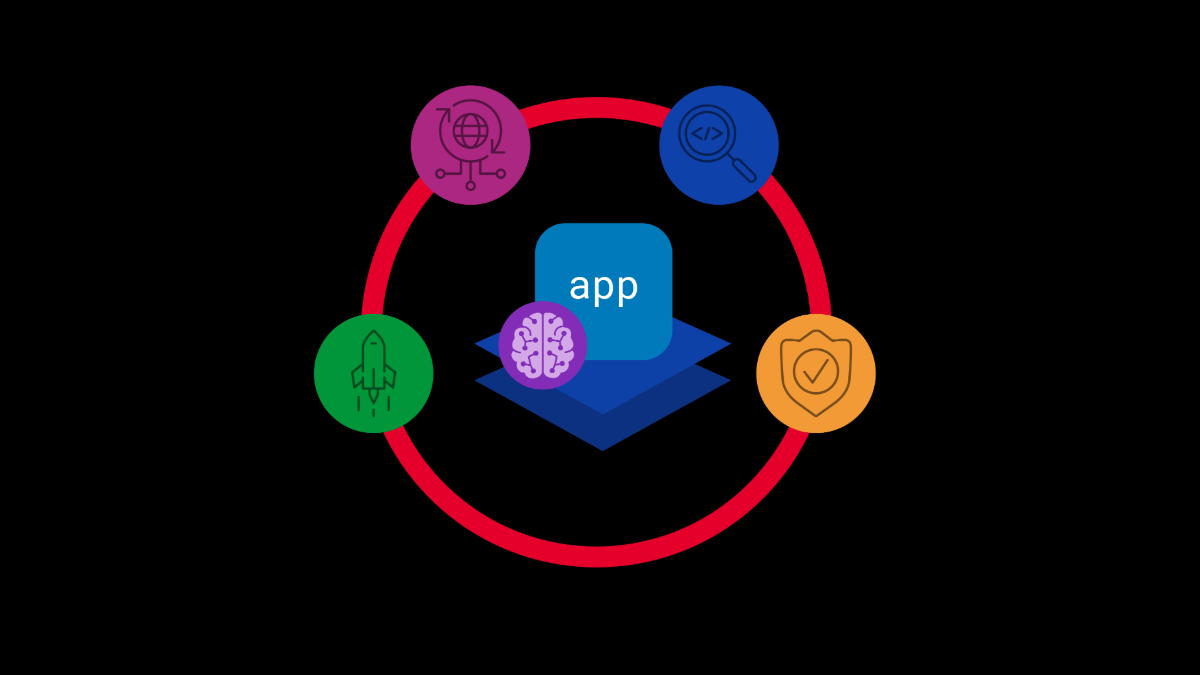
How a leading U.S. health insurer evolved toward F5 ADSP
See how one of the largest U.S. health insurers progressed from foundational F5 BIG-IP deployments to full adoption of the F5 ADSP.
By Chandni Dighe
F5 Labs AI model security insights: What CISOs need to measure both before and after deployment
Performance is not a security measure. Learn what CISOs should measure across the AI lifecycle using F5 CASI, F5 ARS, and F5 threat intelligence.
By Malcolm Heath, Louise Scully
Right for the wrong reasons: The unstoppable rise to 2 billion APIs
The old API sprawl math was human-limited. AI agents now create and chain endpoints autonomously, driving rapid growth in AI-related API calls and integrations.
By Lori Mac Vittie
Agentic AI changes the key questions for CISOs
As non-human identities proliferate, F5 research suggests more visibility, governance, and accountability are needed to minimize cybersecurity risk.
By Sean Murphy